This section offers guidance to trainers on how to maximize the effectiveness of the approaches and exercises included in the technical modules. Most importantly, this guide empowers Trainers to dynamically engage training participants. Trainers will likely include basic operational definition as part of the introduction. Active participation is critical not only to increase understanding and learning, but for trainees to adjust the emphasis on certain messages and content according to the capacity and experiences the actors. Referring to case studies, stories and examples from the trainees throughout the training will make the content more interesting and relevant for them.
Attributes of an Effective Trainer
The Trainer plays one of the most critical roles in the delivery of the training and ought to have some key attributes. The Trainer’s effectiveness in introducing new, sometimes difficult to understand concepts, largely determines how much understanding and learning trainees are able to achieve.
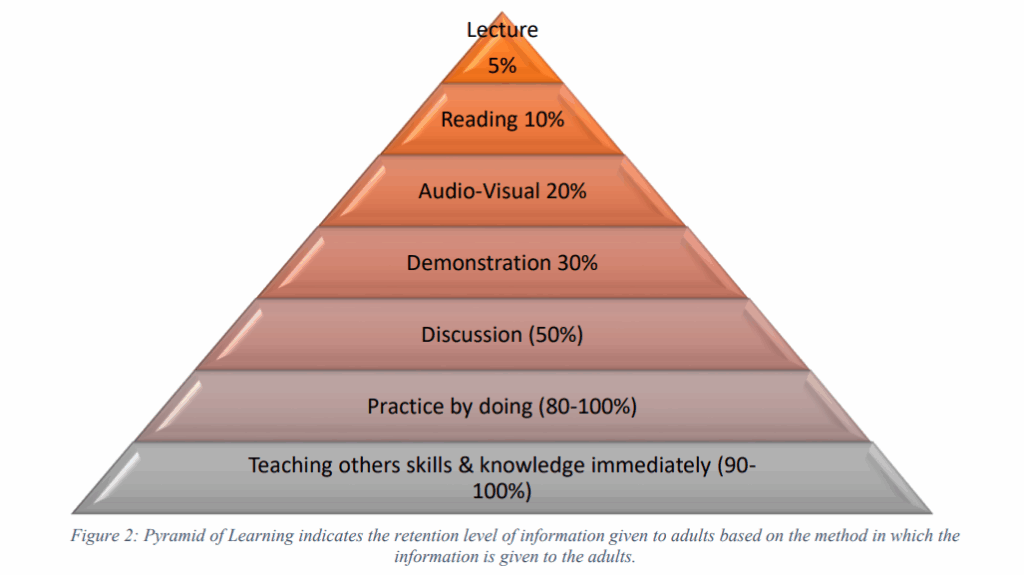
A number of techniques are available for facilitating training of target groups. The Trainer needs to make a choice during planning for training on which techniques to apply, often dependent on group size, age bracket, level of understanding, sensitivity of issues at hand etc. It is important to vary the techniques during a training session to ensure sustained interest and effective communication to the Trainees. As an important pointer, the Trainer needs to be aware of the pyramid of learning.
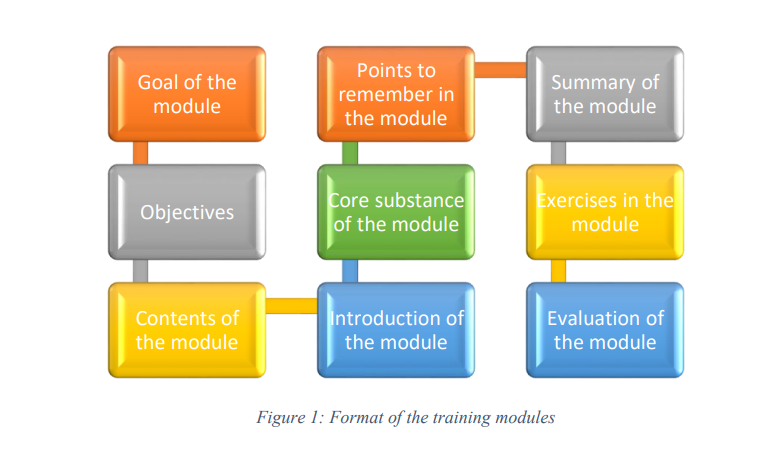
The Facilitators should be familiar with the structure of delivery of each of the five modules. Note that each module follows the same format but training techniques will vary. Nine steps form the format of the modules delivery as illustrated here.
 SCEJU Learning